


A Day in the Life of a Japanese Language Student
Learning Japanese is not just about memorizing vocabulary. For many students, progress comes from how often the language becomes part of everyday life. A typical day may begin with a quick review of flashcards, a few kanji notes, or Japanese audio on the way to class. Even a short study session can help shift attention into Japanese before the school day begins.
Intensive Classes and Active Practice
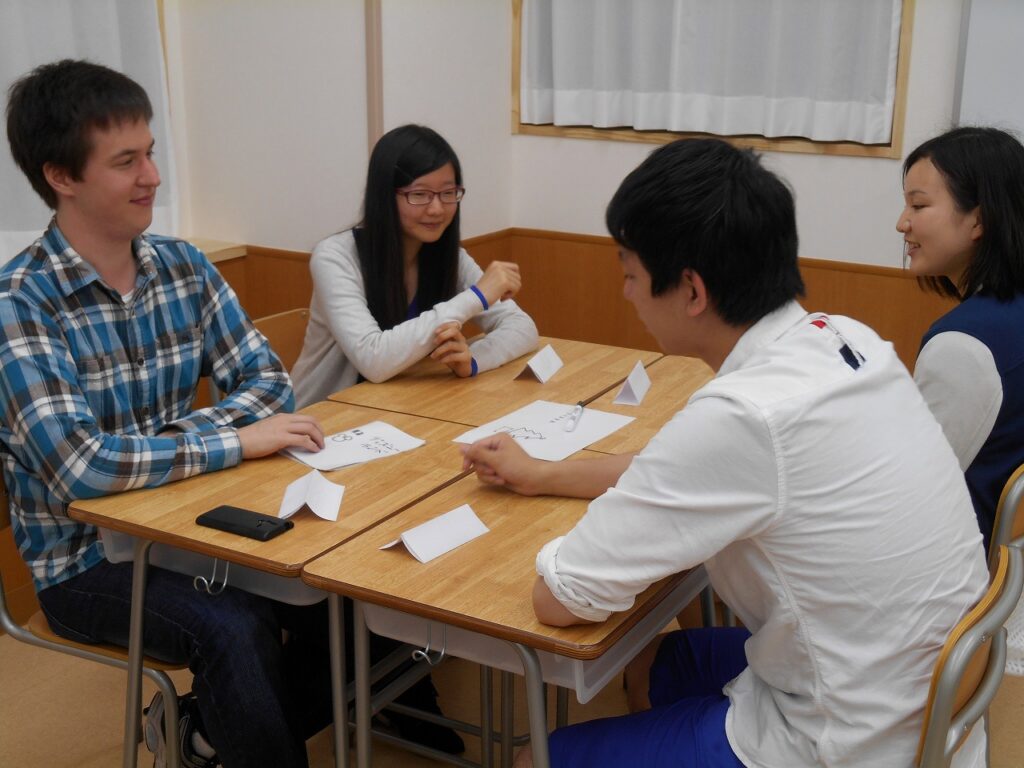
Once class starts, the pace in an intensive Japanese program can feel demanding. Students are often expected to keep up with new vocabulary, kanji, listening practice, and speaking activities every day. In some programs, classes are small and communication-focused, with multiple instructors and a strong emphasis on using Japanese actively rather than only memorizing it.
At KCP International, for example, Japanese language classes use the Direct Method, while culture classes are usually taught in English. Classes typically include about 15 to 20 students, with two to three instructors depending on level. KCP also describes its program as intensive, with more than 200 classroom hours per term and an expectation that students spend several hours a day studying outside class.

A KCP student demonstrates his Japanese-language skills during a speech contest on campus.
Learning Beyond the Classroom
After class, practice can continue in ordinary moments. Reading train signs, ordering food, or handling simple errands in Japanese can reinforce what students learned earlier in the day. That is one reason studying in Japan appeals to so many learners: daily life becomes part of the learning process.
For students in Tokyo, that experience can be especially noticeable. At KCP, full immersion extends beyond the classroom through structured academics and optional housing choices that can support daily language use.

Students practice using Japanese in everyday life while ordering food in Japan.
Evenings for Review and Preparation
Evenings are often a time for review, homework, and preparation for the next class. Where a student lives can shape that experience too. KCP offers dormitory and homestay options, and both can influence how much Japanese a student hears and uses outside the classroom.
Why the Daily Rhythm Matters
For students thinking about learning Japanese in Japan, that daily rhythm is part of the value. Progress comes from class time, repetition, and the small moments in between. A strong study abroad experience is not only about what happens in class, but also about how often Japanese becomes part of everyday life.